Data To Art
Data To Art is a curated online gallery showcasing the work of international data experts. It explores the beauty of data and the power of visual storytelling.
What's upLatest
Data To Art is constantly growing, with new artists and projects added to the gallery as soon as we discover them.
Most recently, we were pleased to add the work of Alisa Singer, whose art transforms climate science, social issues, and personal experiences into vibrant, data-driven visual pieces.
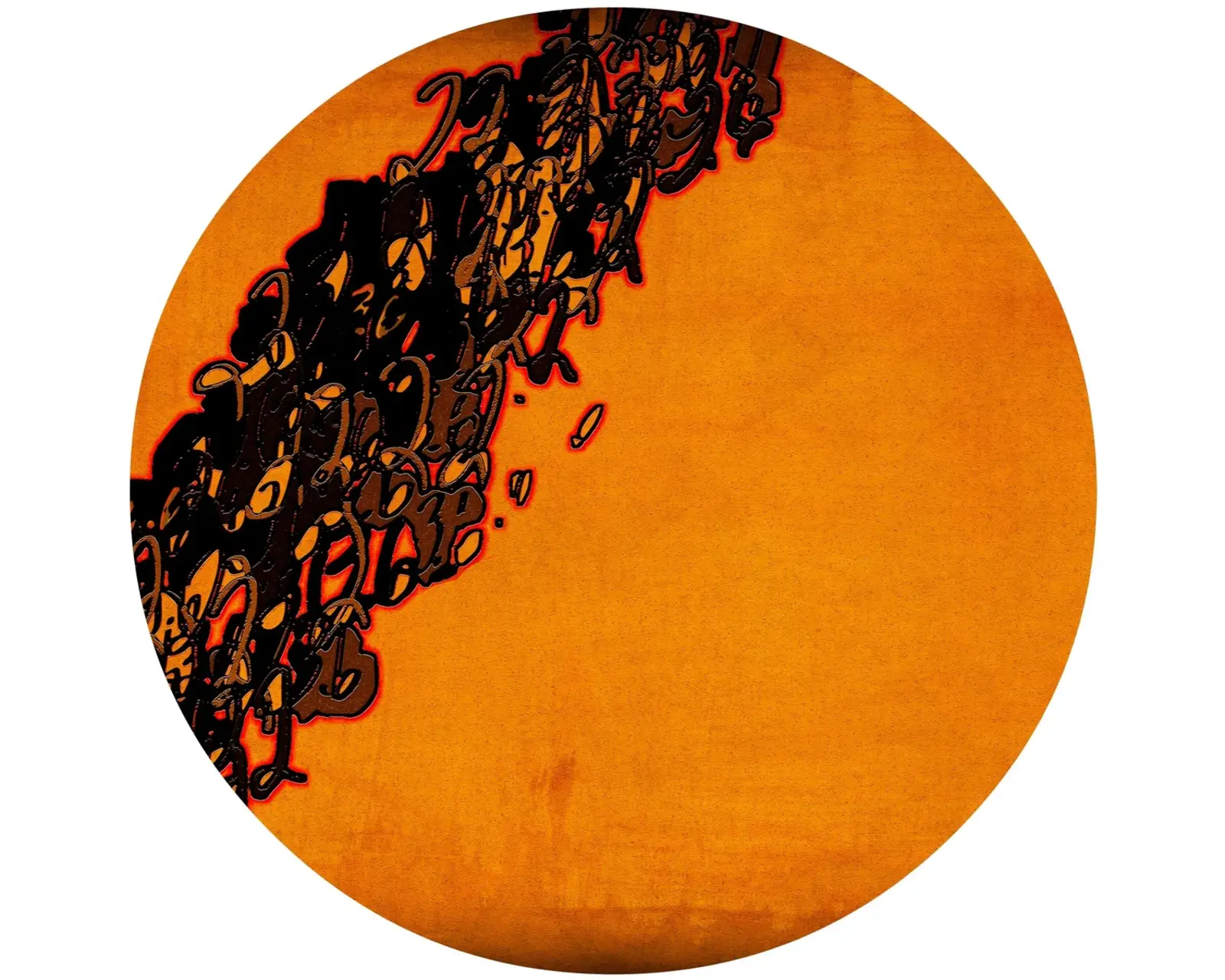
Alisa’s work is organized into a project titled Environmental Graphiti.
Currently featuring
0 artistsMeet the artists
Currently featuring
This gallery showcases a growing selection of talented data artists, celebrating diverse voices and styles from around the world.
Explore their unique creations and get inspired by the many ways data can be transformed into art.
Data Art
What's that?
Data Art
Data art is a creative practice that transforms raw data into visually compelling artworks. By blending aesthetics with information, data artists use charts, patterns, and interactive visuals to reveal stories, emotions, and insights hidden within datasets.
Data art acts as a cursor between science and abstraction. Some works feel like scientific figures, with annotations and numbers that speak for themselves. Others drift into pure abstraction, only revealing their meaning with extra context.
While data art and generative art both involve digital creativity, they are not the same. Data art specifically uses real-world data as its source material, aiming to visualize information, patterns, or stories embedded in that data.
In contrast, generative art is created through algorithms and autonomous systems that generate visuals often without a direct connection to external data. Data art focuses on revealing meaning and insights from existing datasets, whereas generative art emphasizes process, randomness, and system-driven creativity.
Data, In Real LifeExhibition
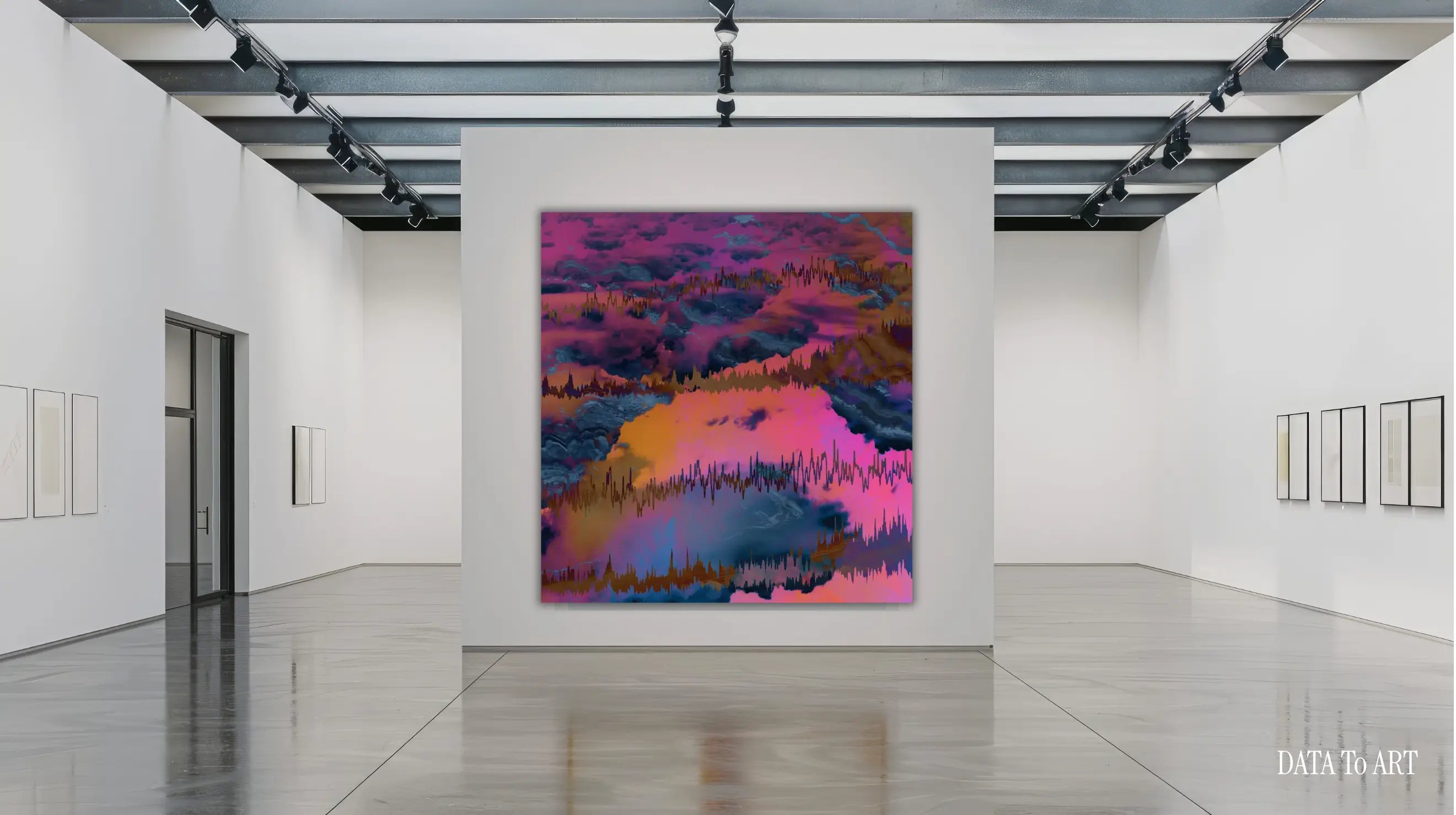
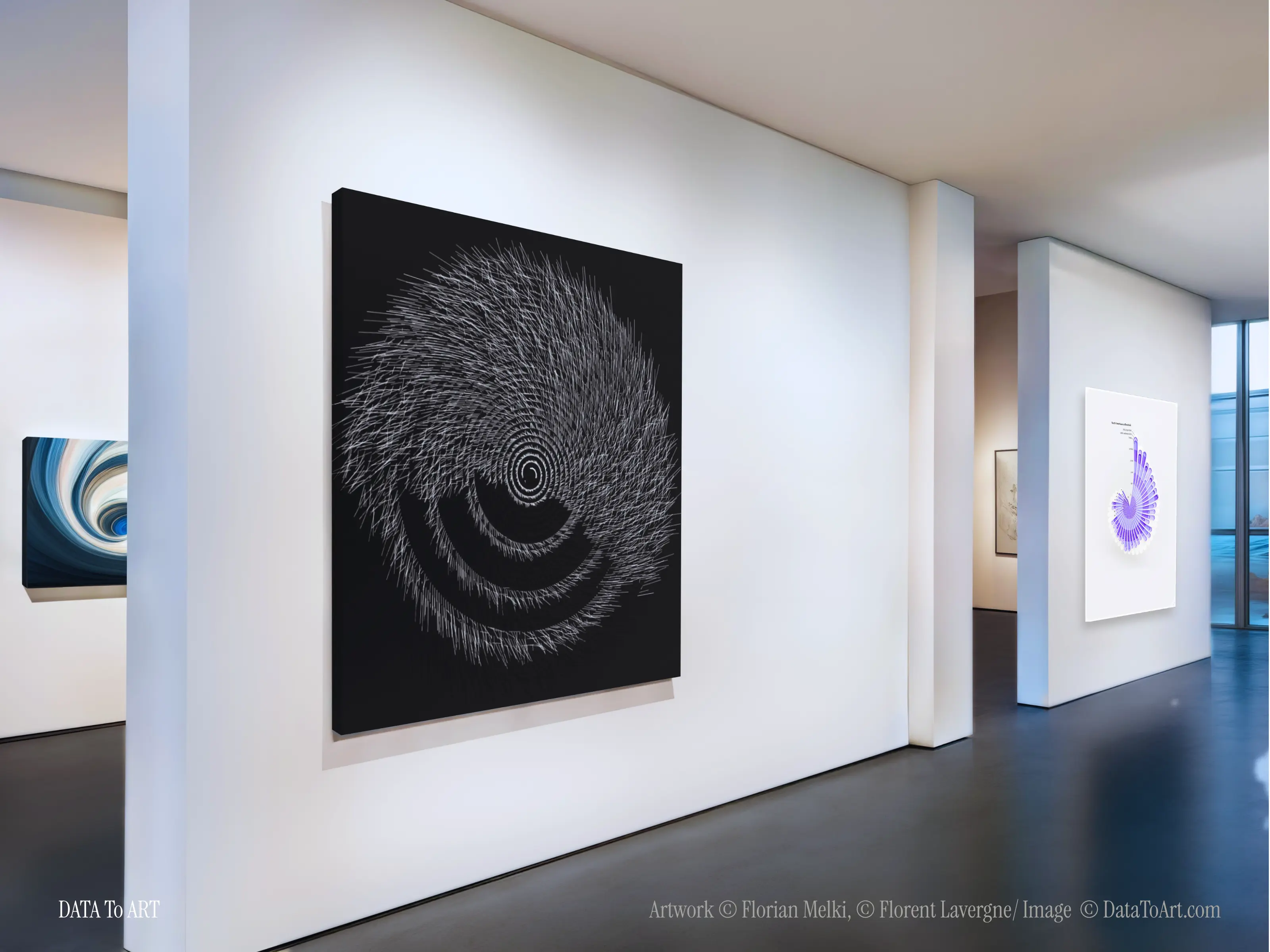
Data art is captivating on a screen, but its true magic comes alive in the real world — on a canvas you can see, touch, and feel.
We celebrate this intersection of data, design, and emotion by gathering exhibitions, installations, and events from around the world.
Our goal is to build the most comprehensive archive of data art — past, present, and future. If you’ve come across an exhibition we should know about, we’d love for you to share it with us.
Loading data...
Work with usCreate an Expo

Designing a data exhibition requires more than displaying charts on walls. It involves curatorial thinking, narrative structure, spatial design, and a deep understanding of data as a cultural medium.
Data To Art develops data exhibitions for institutions and organizations, transforming existing data into meaningful, accessible, and engaging physical experiences. Curated and led by Marthe Viallet, with over ten years of experience in data exhibitions and cultural data projects.
Want to submit your work?
Data To Art is a curated online gallery celebrating outstanding data art projects. Reach out if you’d like to submit your work for consideration.