GenCup
GenCup — a contraction of generative and World Cup — is a data-driven art project that turns football matches into textured visual compositions, one poster per game.
Published on December 18, 2022
GenCup — a contraction of generative and World Cup — is a data-driven art project that turns football matches into textured visual compositions, one poster per game.
Published on December 18, 2022
GenCup, a contraction of generative and World Cup, is a data-driven art project that transforms football matches into textured visual compositions. Based on structured data such as possession, goals, passes and match intensity, the project translates the rhythm and emotional tension of each game into shapes, densities and movements.
Rather than offering a conventional or literal infographic reading, GenCup creates a visual memory of the match: different encounters leave unique imprints within the image.
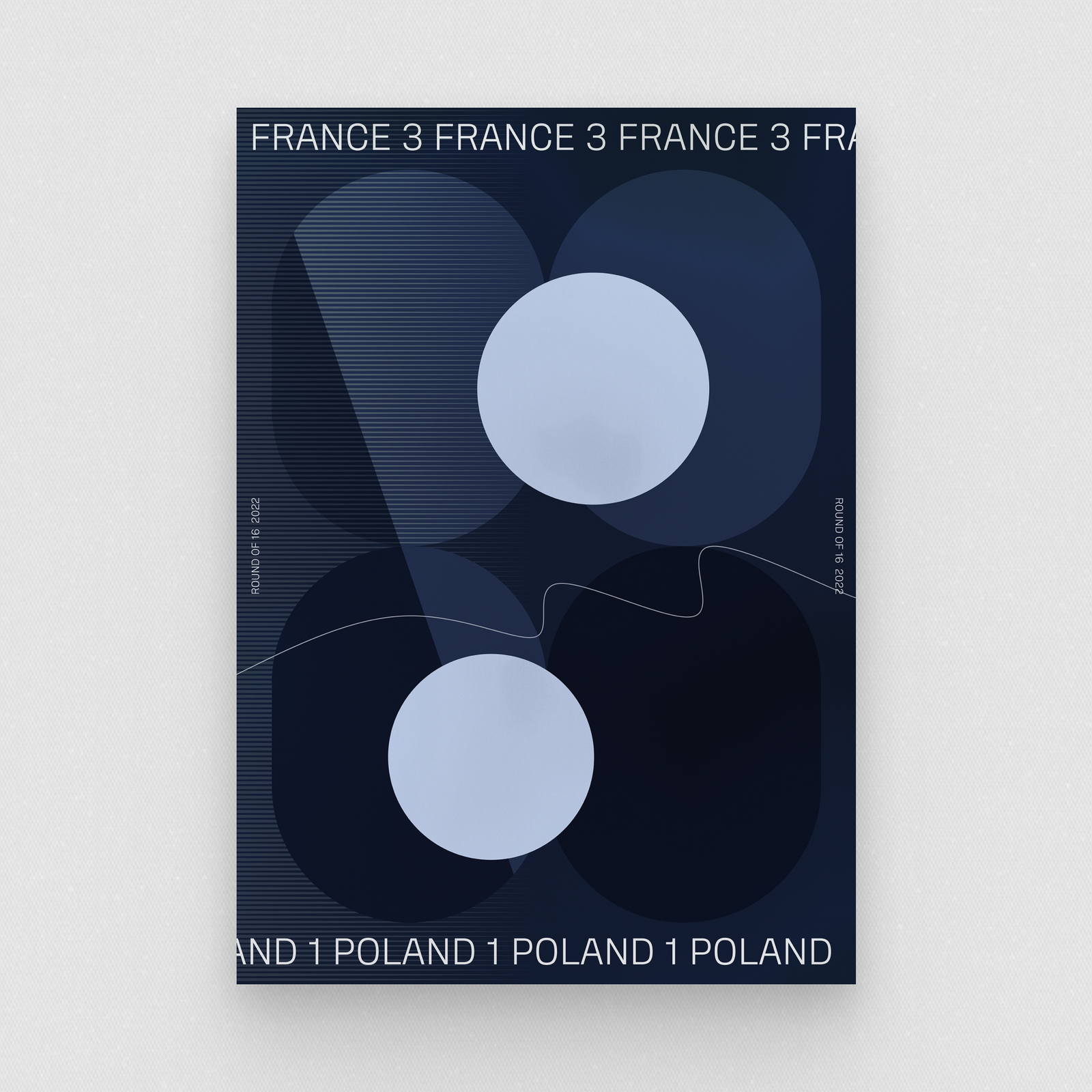
France 3 — 1 Poland. GenCup 2022.
The experience invites viewers to first perceive the raw atmosphere and emotion of the game, before gradually connecting this language of shapes and textures to the real data generated on the field.
For Zeh, this is the whole point — perception comes before analysis. Our brain recognizes patterns far faster than it reads numbers.
When you draw data in different ways, you create new pathways for understanding. You activate the brain beyond the analytics: people start to perceive the data instead of only rationalizing it.
GenCup is a single project that has evolved across several World Cups. Crucially, each edition reinvents its own visual grammar — not just a new palette, but a brand-new logic for encoding the match data. Below, each tournament is shown with its own posters and its own reading key.
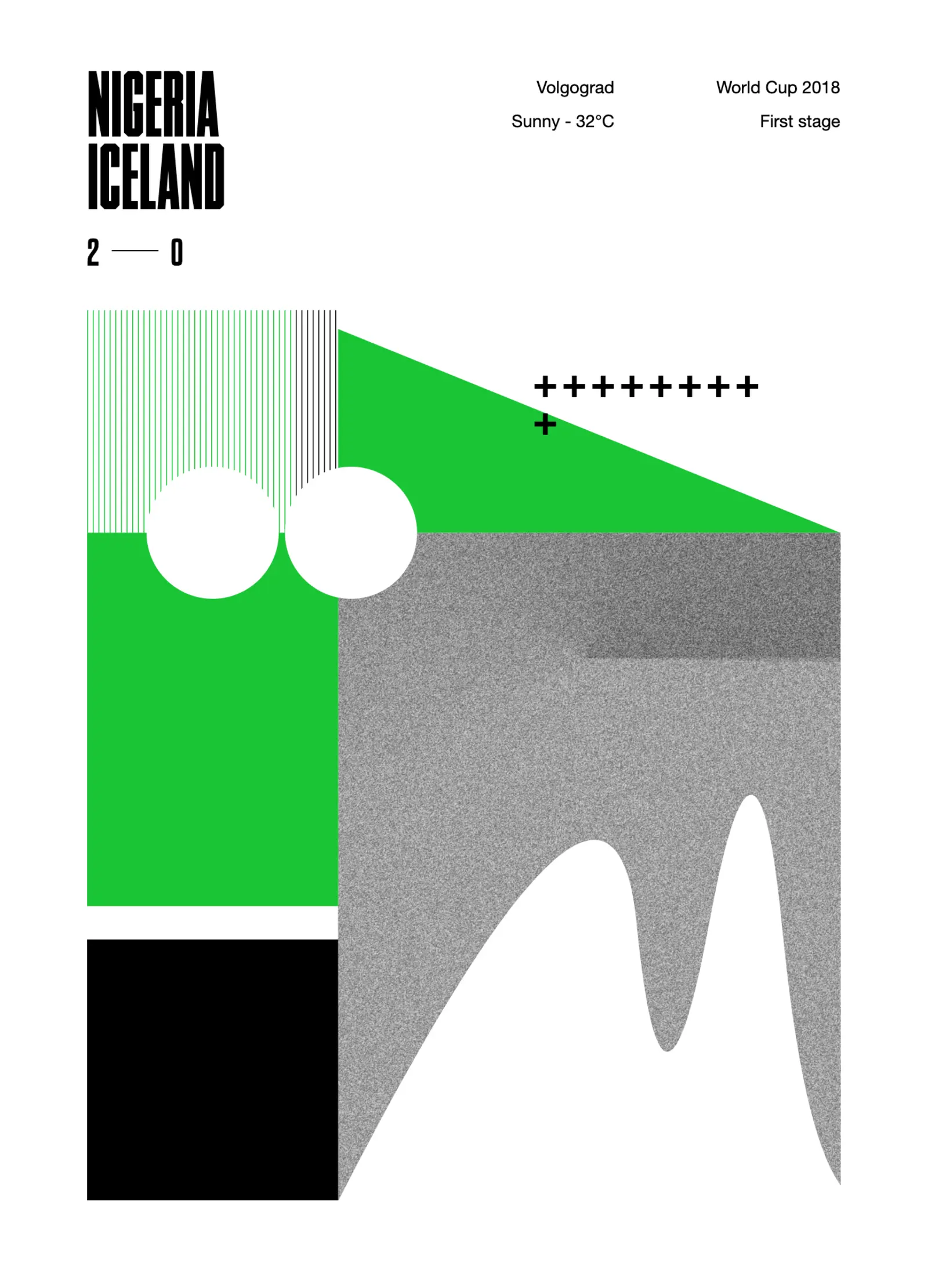
The founding edition that established the idea. Bold condensed type and grainy gradients turn each first-stage match into a tense, textured poster.
Nigeria 2 — 0 Iceland, Volgograd.
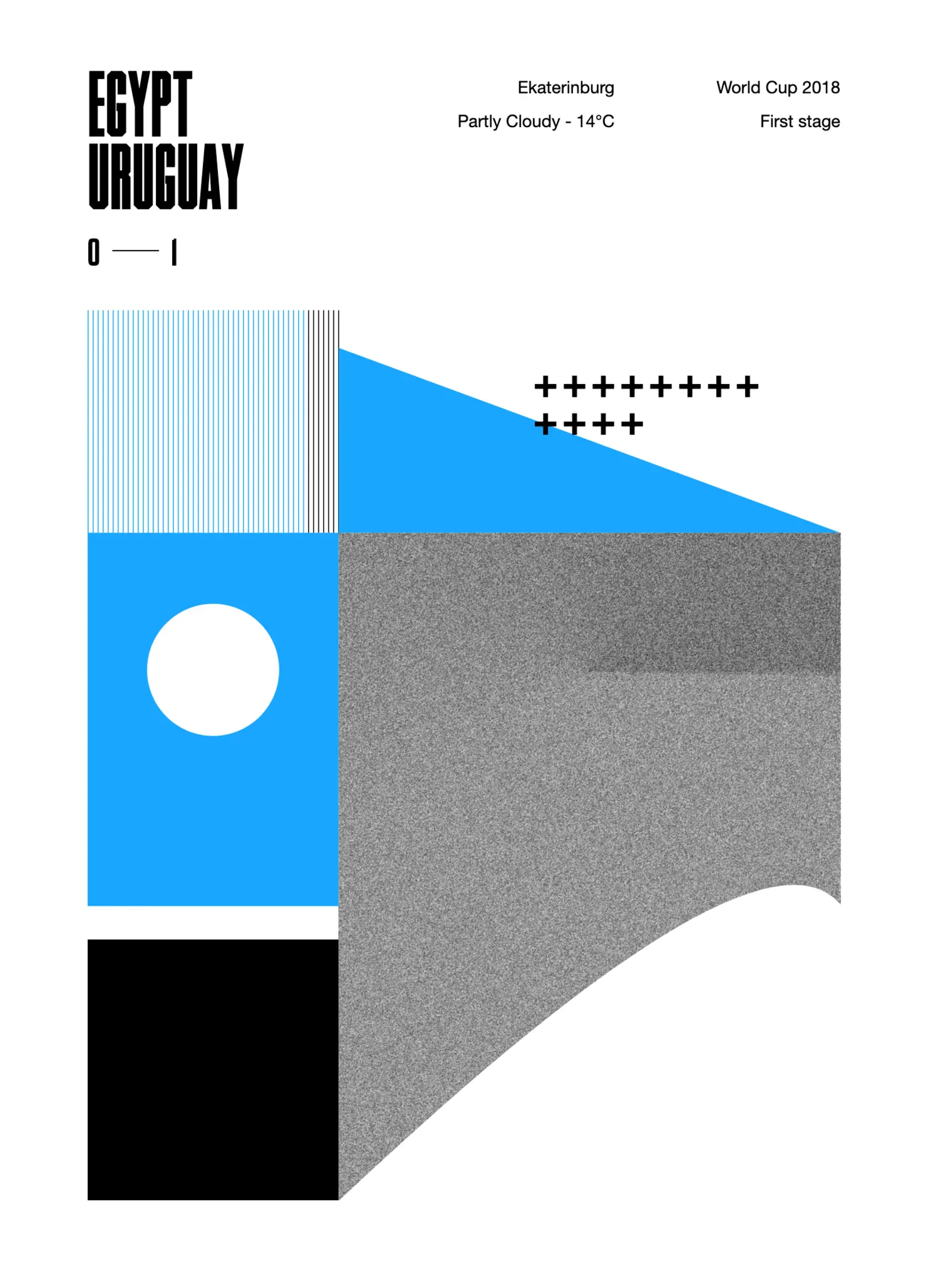
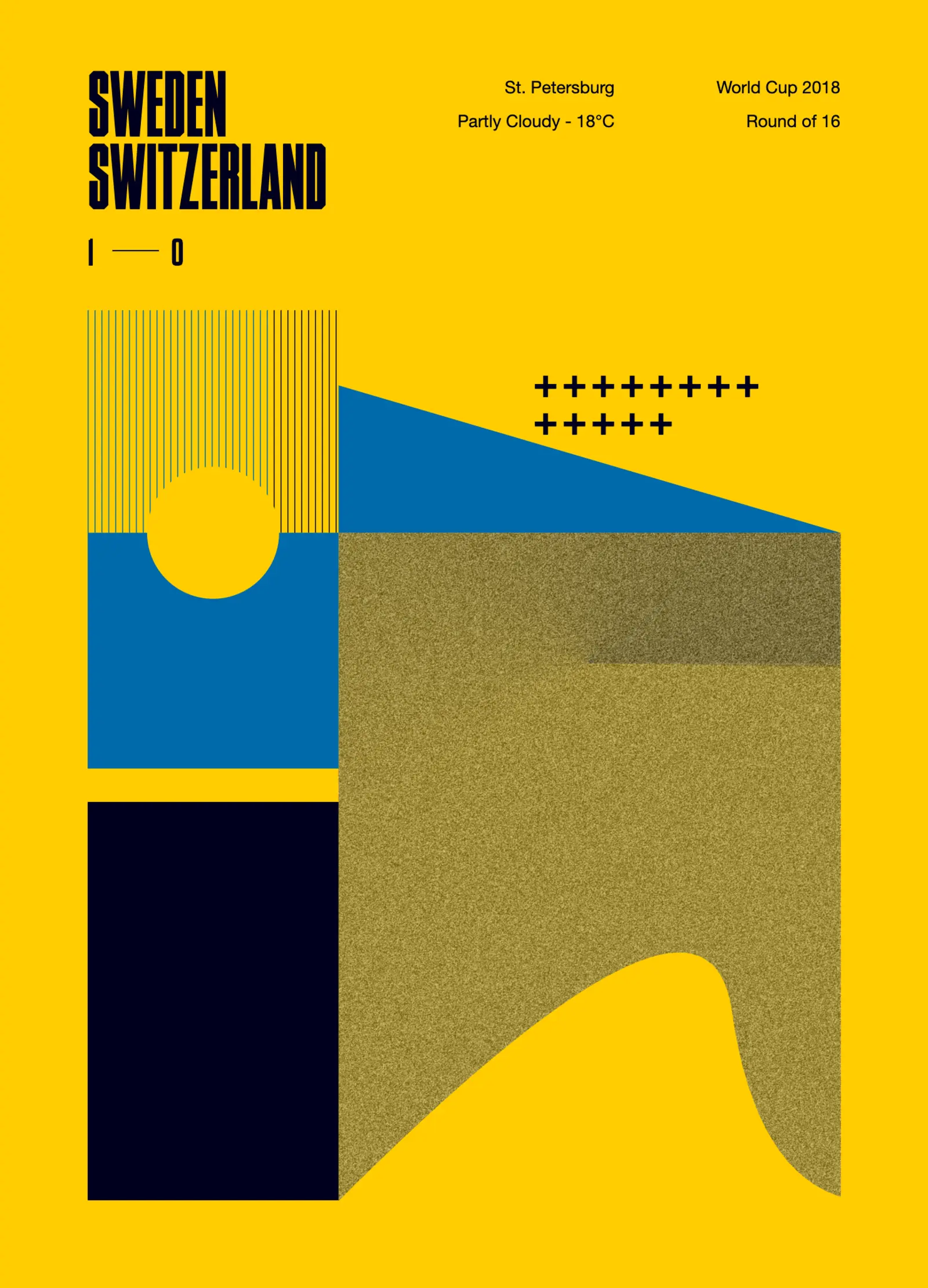
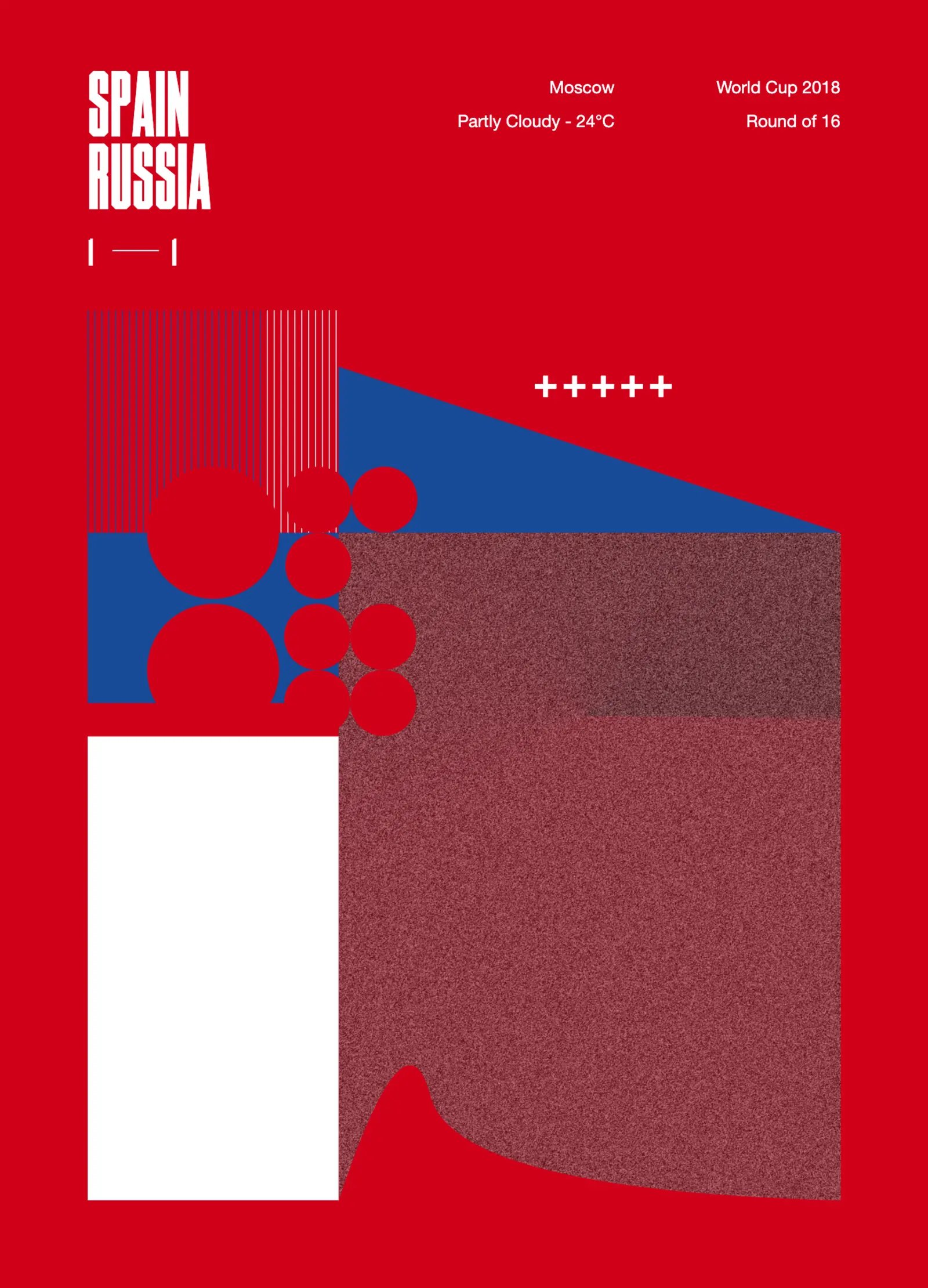
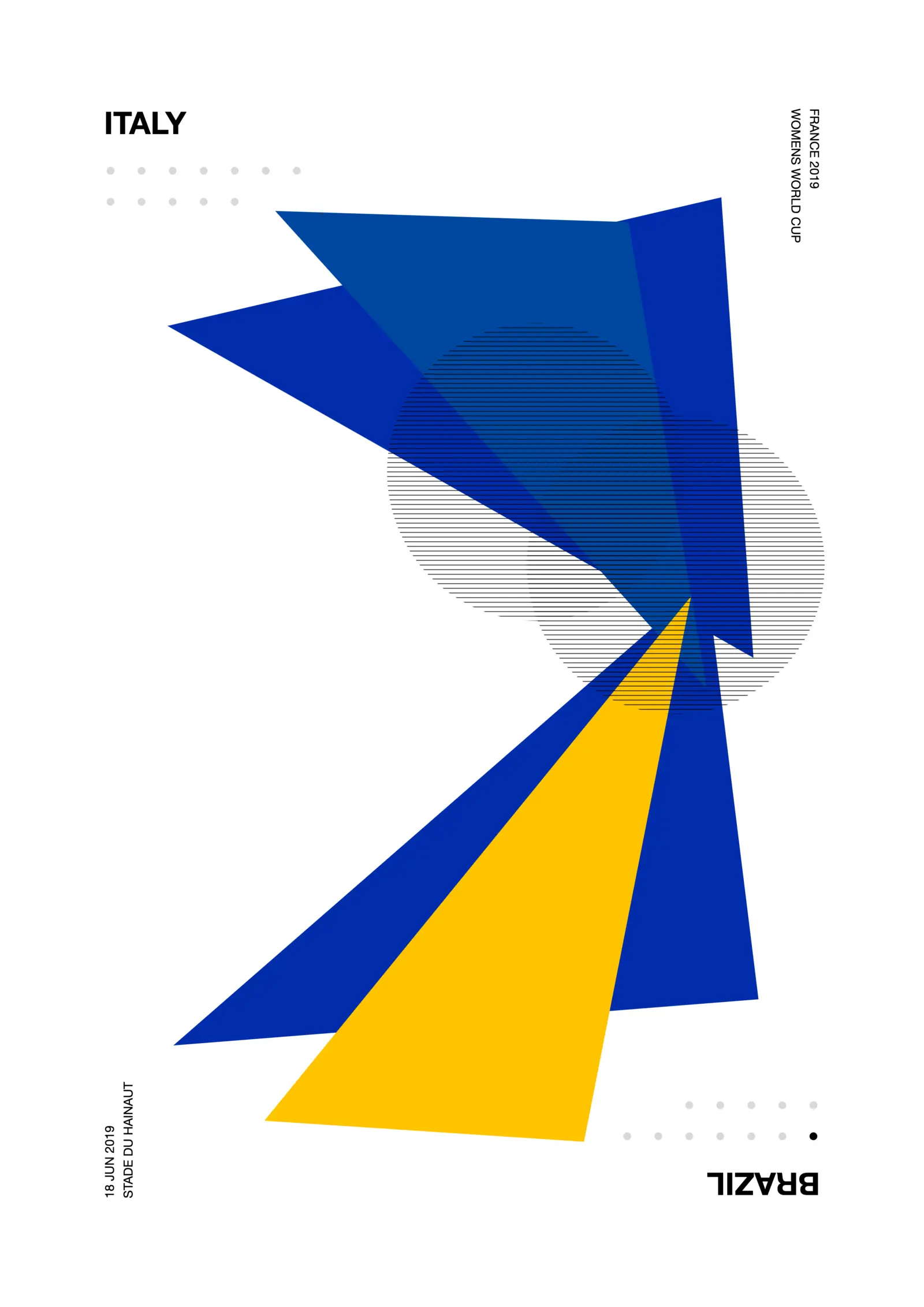
A sharper, geometric language of intersecting lines and hatched circles, orbiting a central gravity point.
Italy — Brazil, Stade du Hainaut.
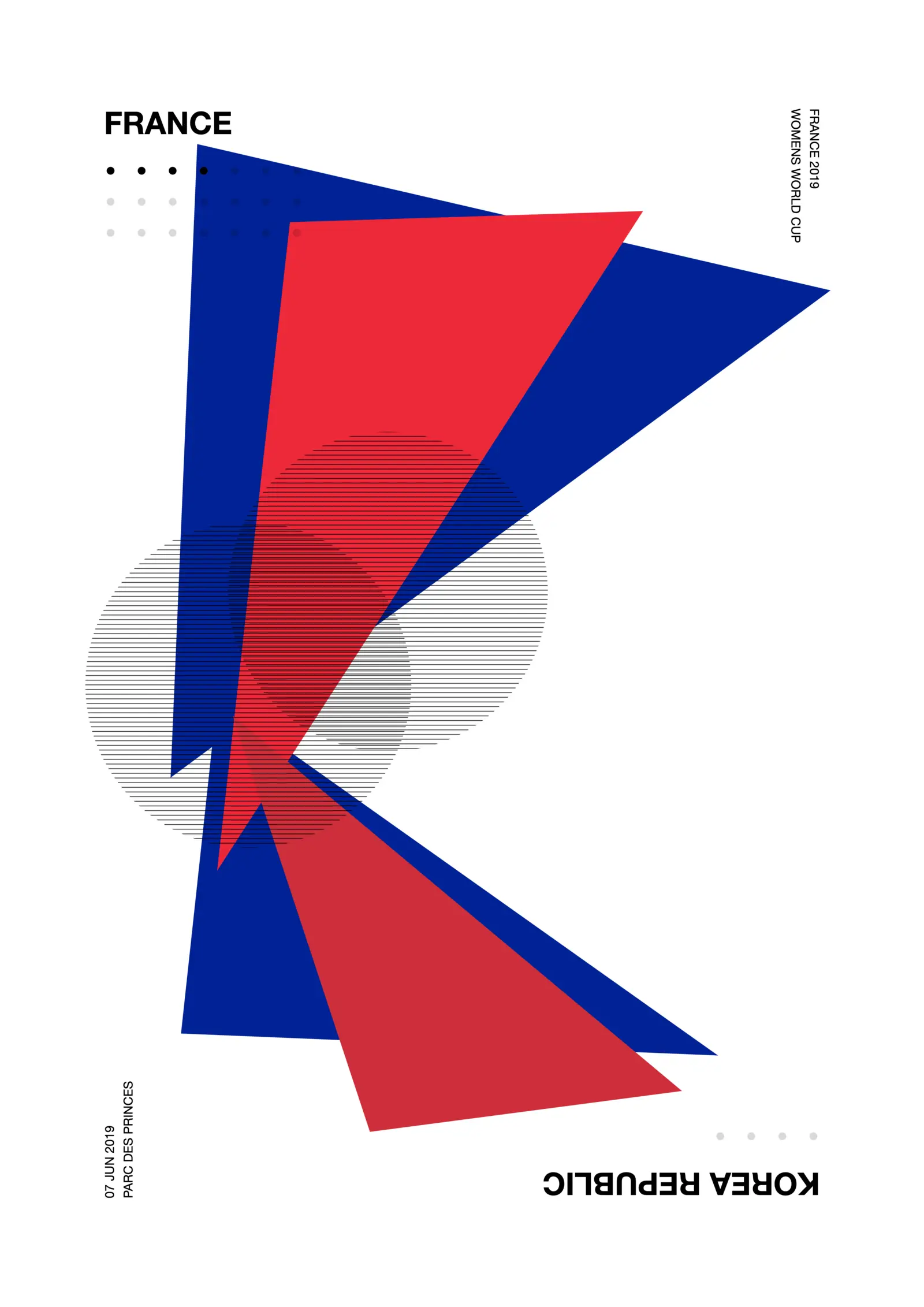
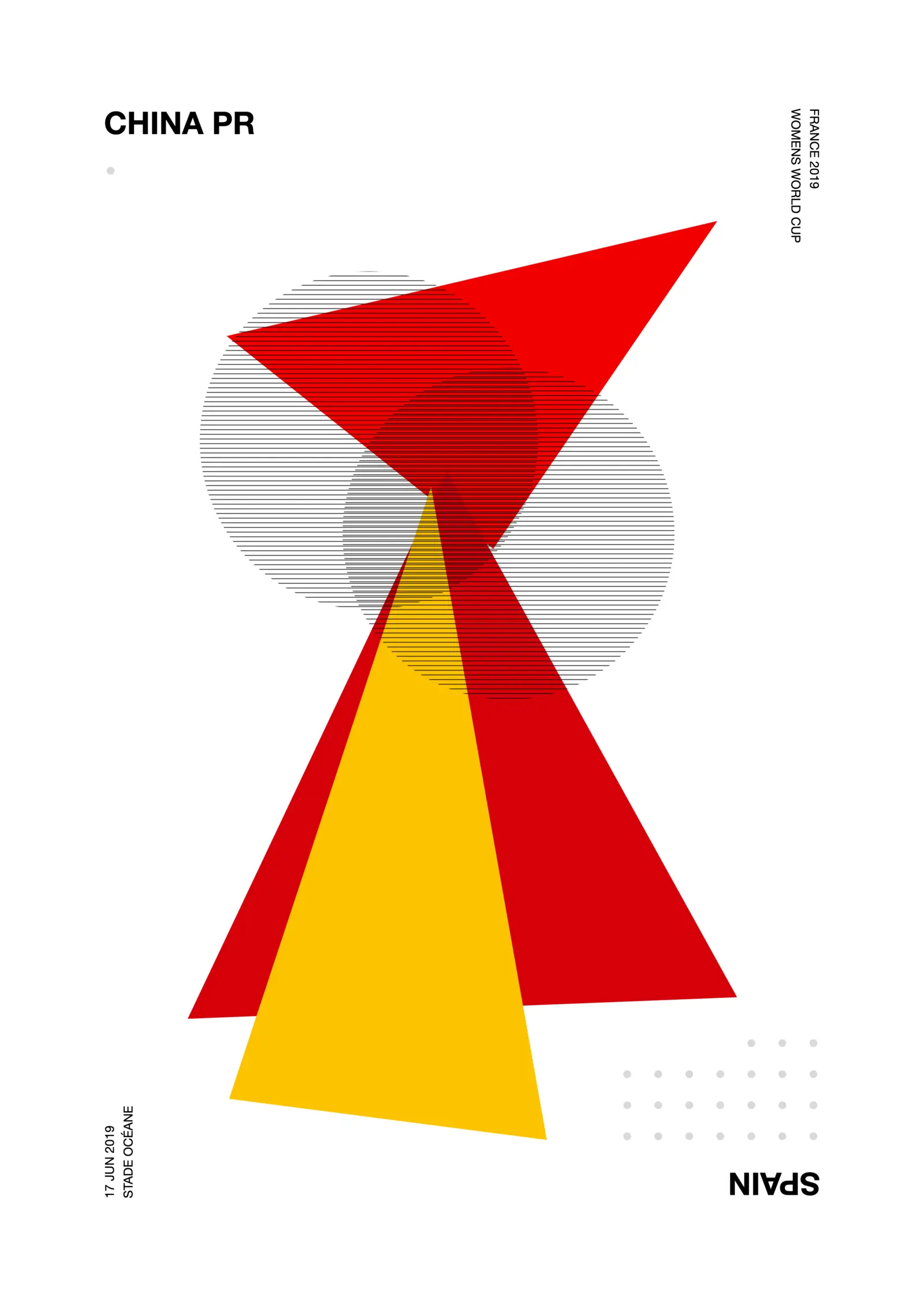
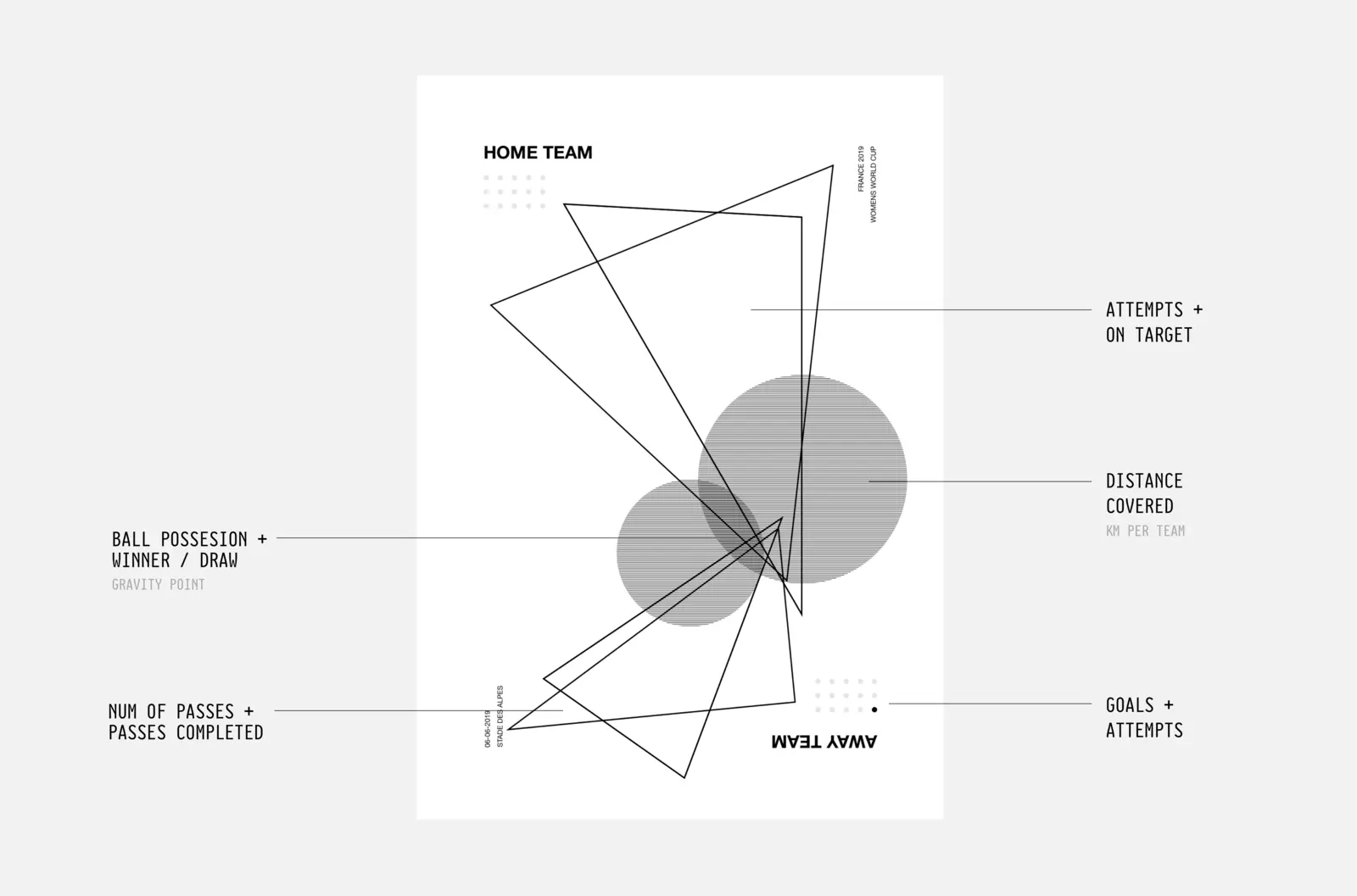
The 2019 encoding blueprint.
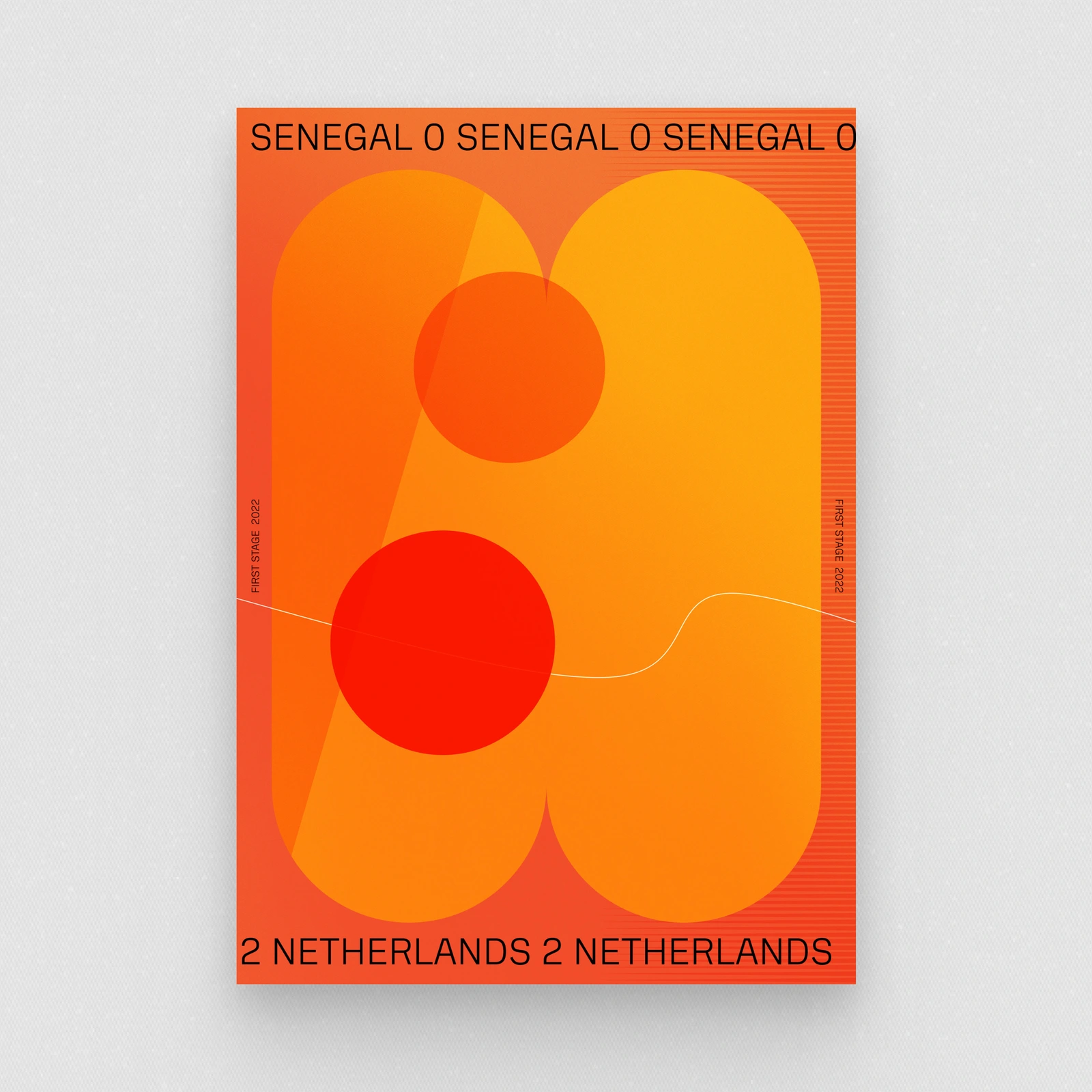
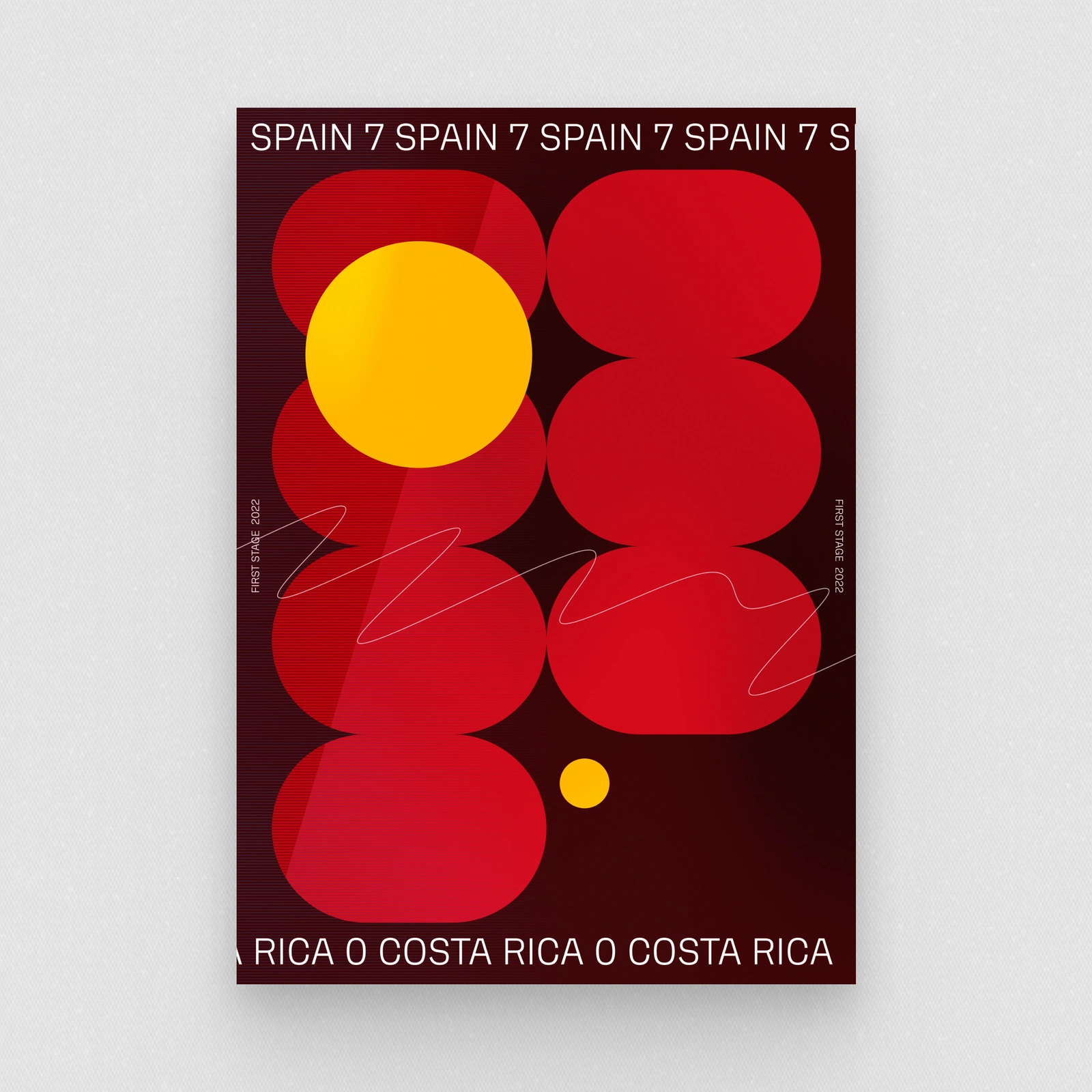
Warm, rounded forms and saturated gradients give the 2022 series its own unmistakable identity, built on a system of two stacked capsules.
Senegal 0 — 2 Netherlands, first stage.
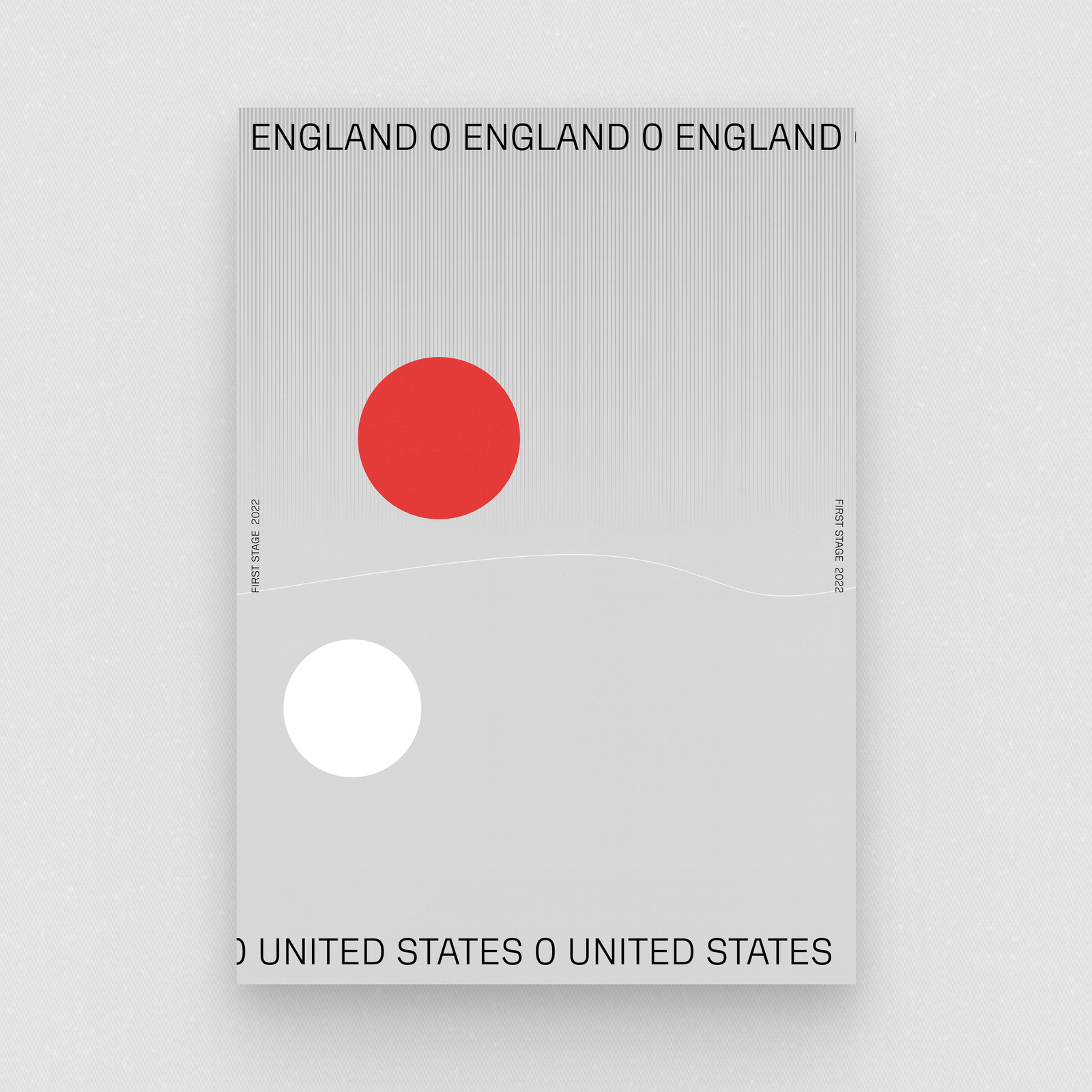
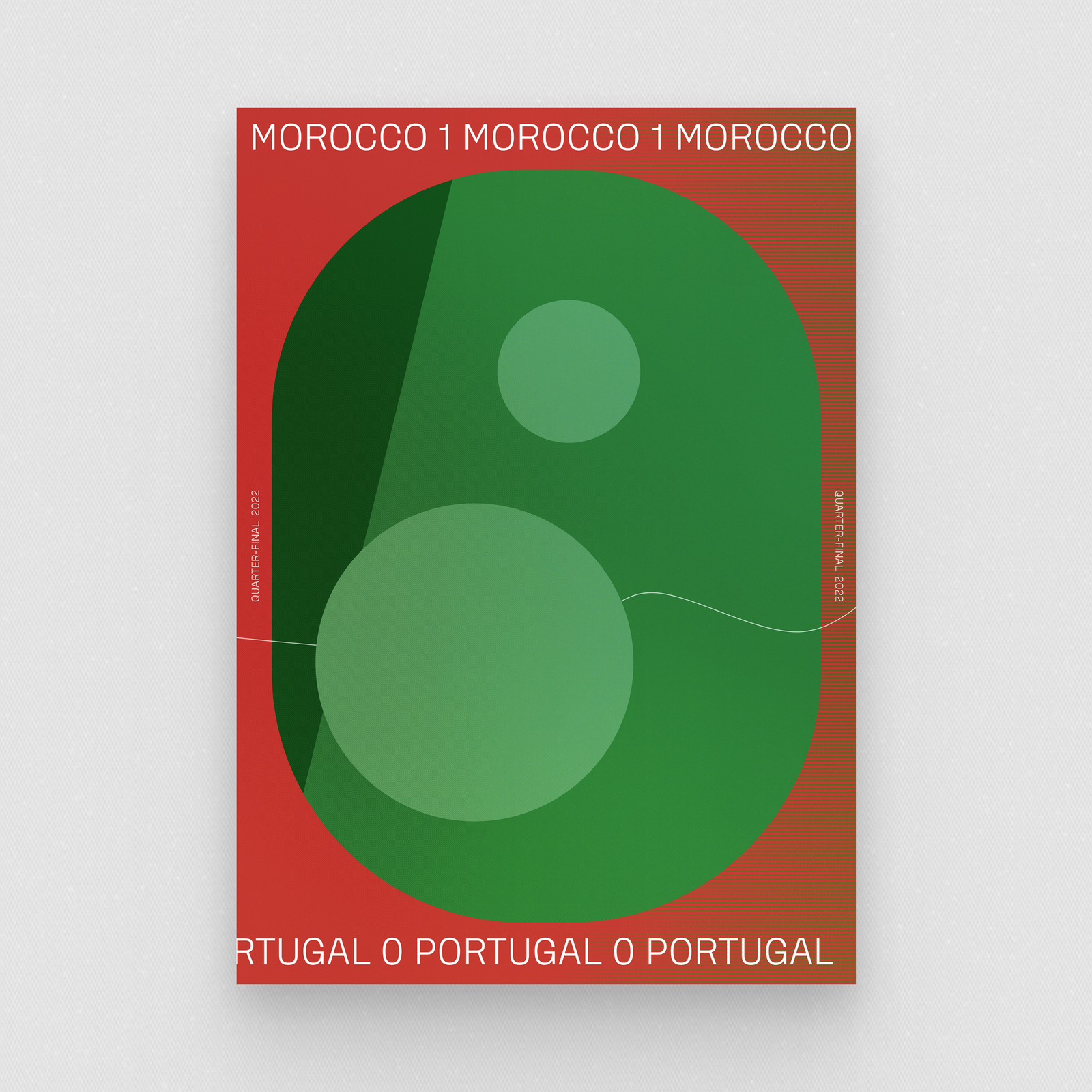
Each match is drawn as two stacked capsules — the home team on top, the away team below:
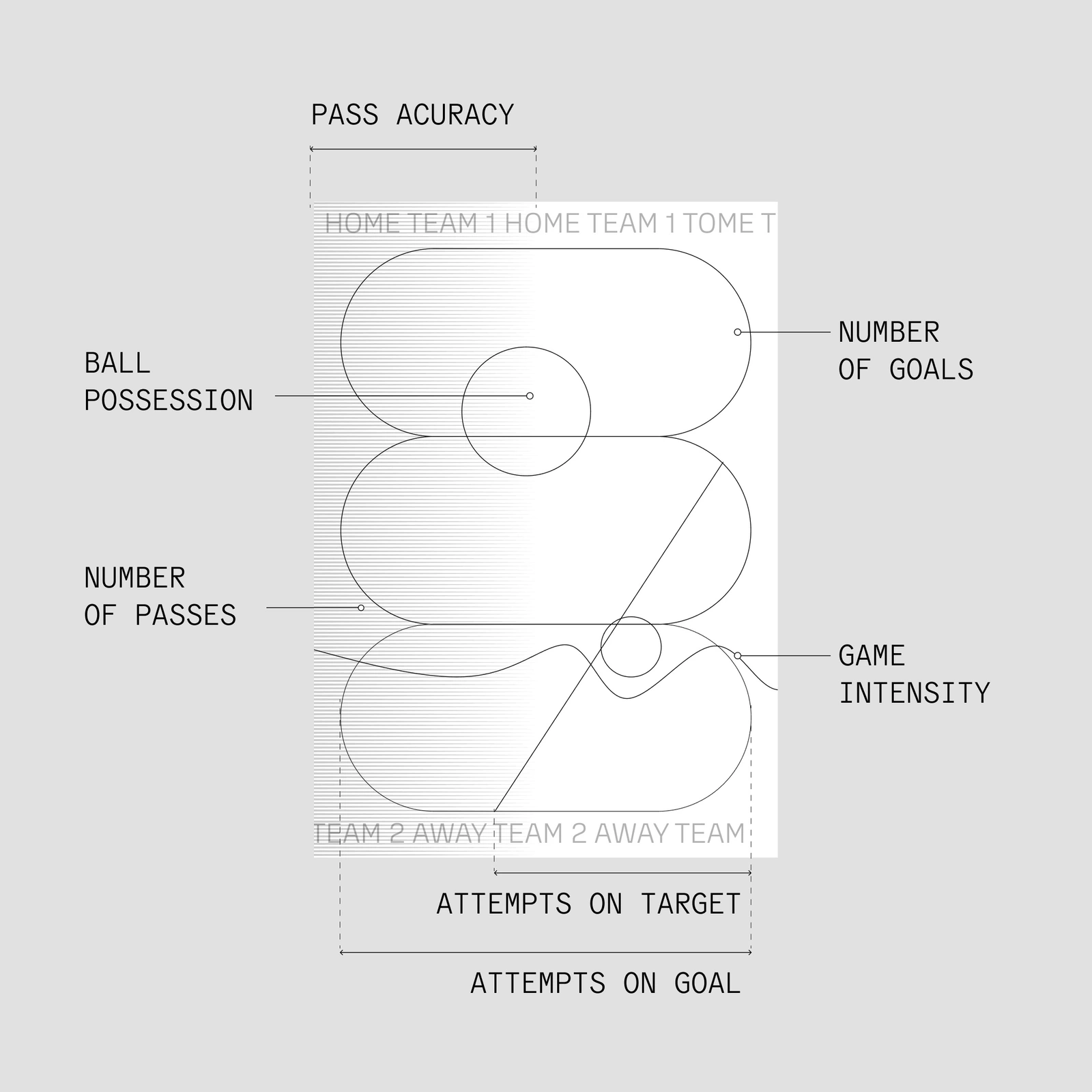
The 2022 encoding blueprint.
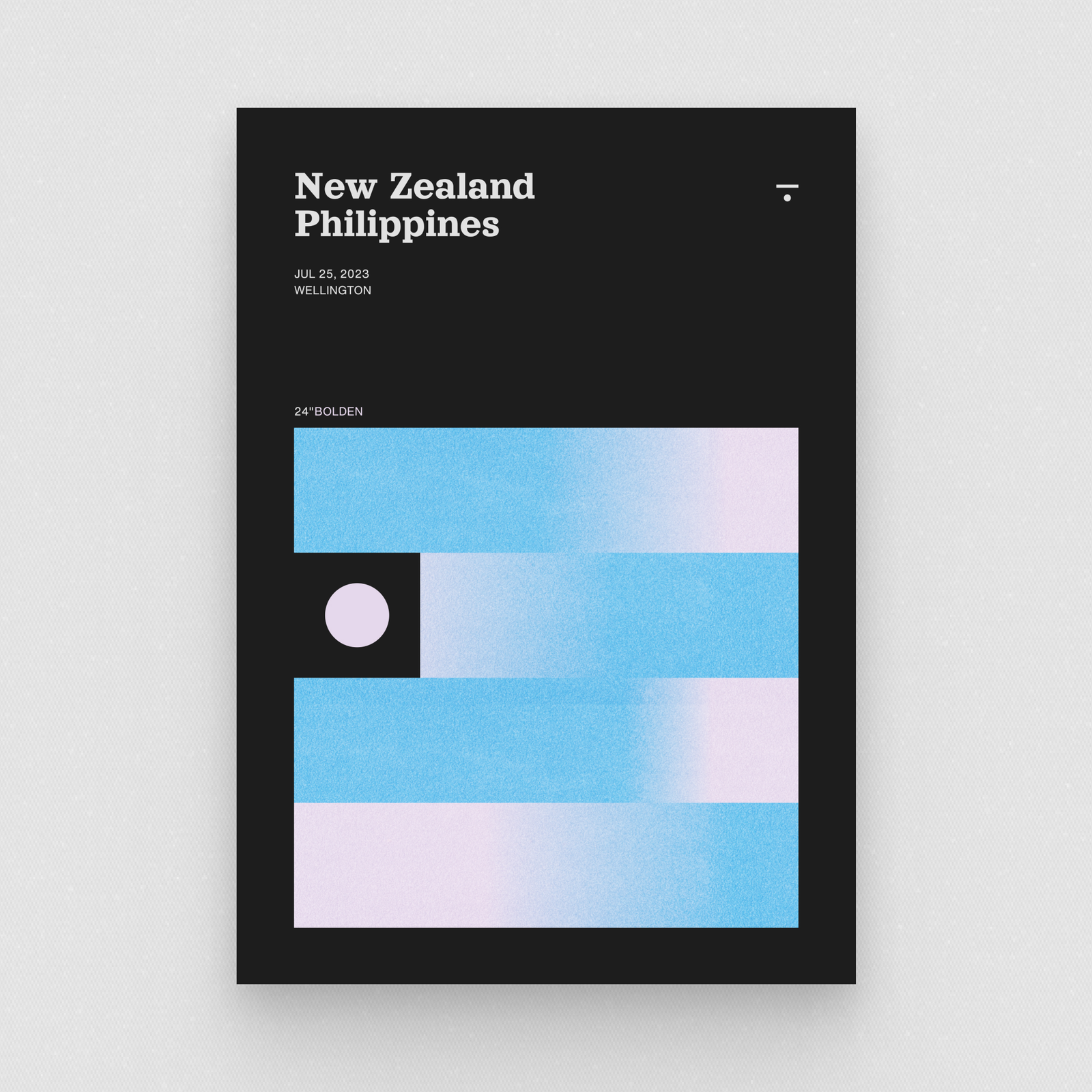
The most recent completed edition switches to a quadrant grid, where the match literally unfolds across the canvas over time.
New Zealand — Philippines, Wellington.
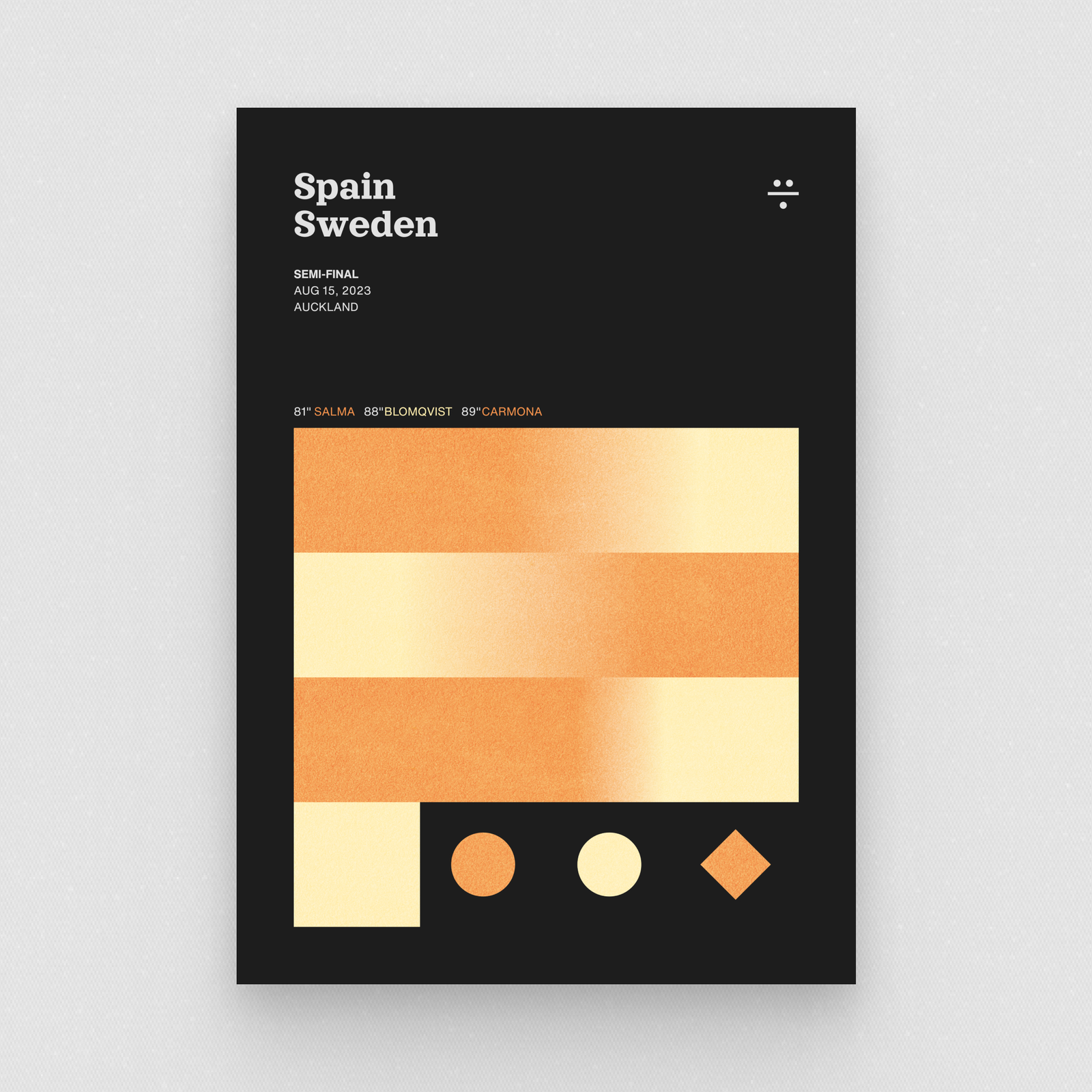
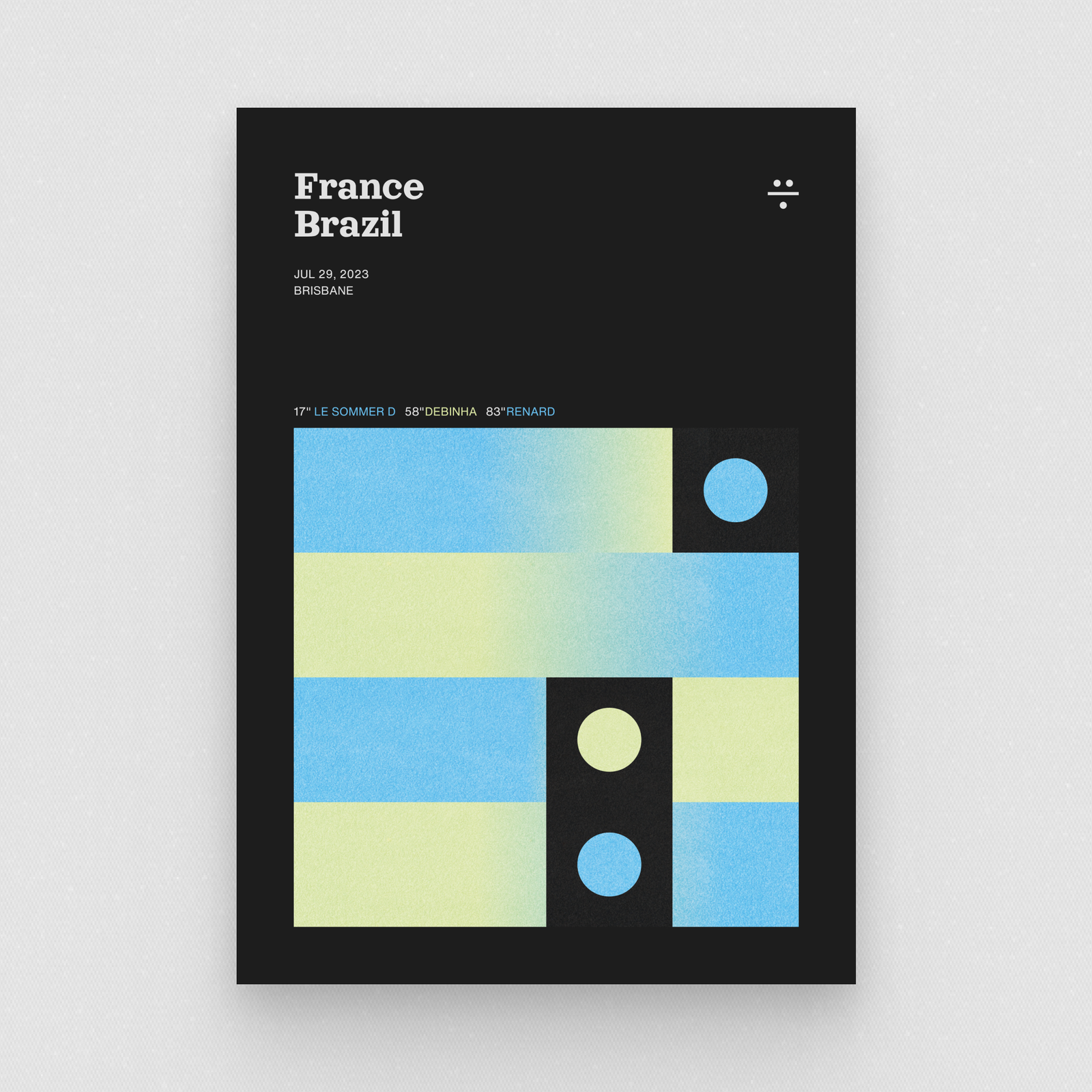
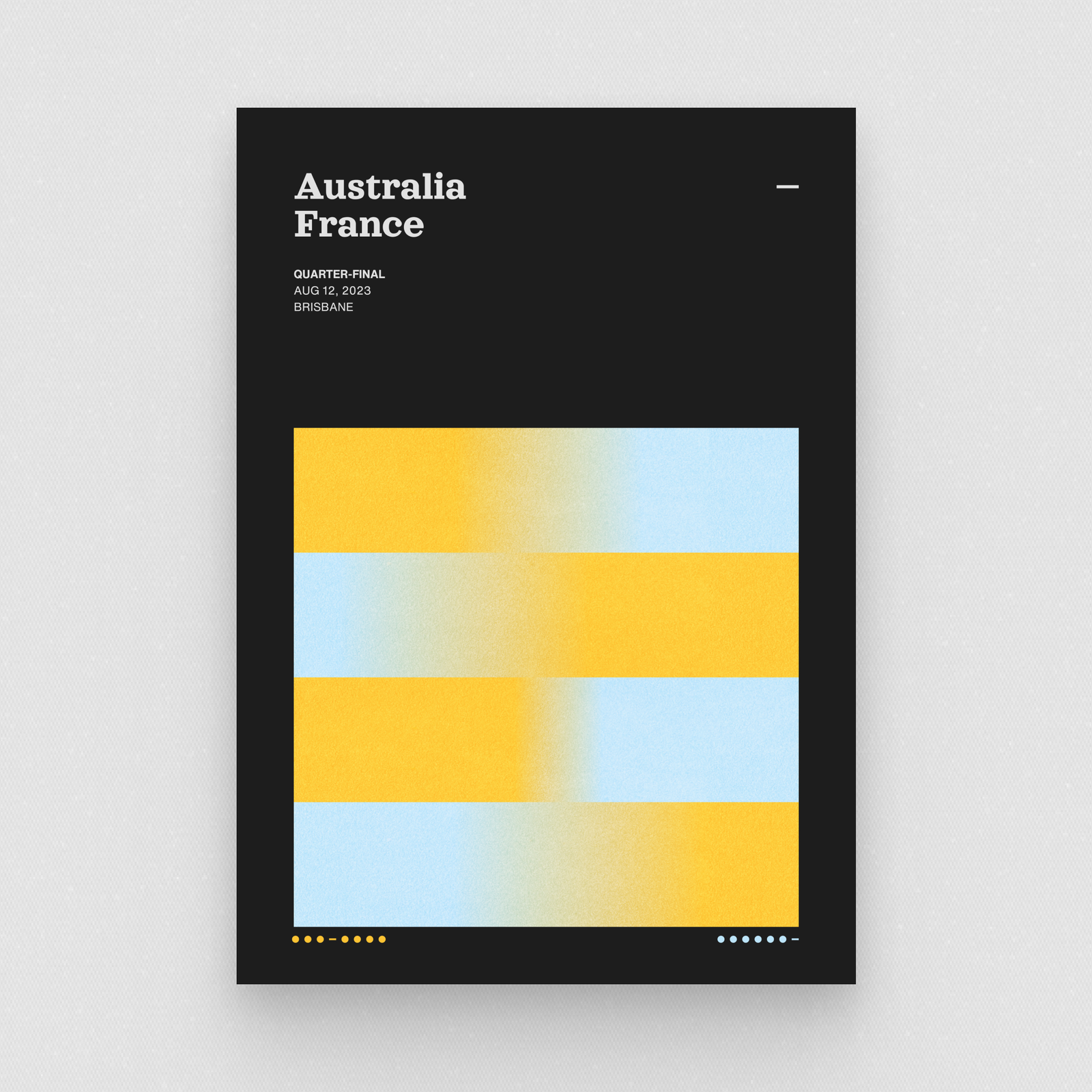
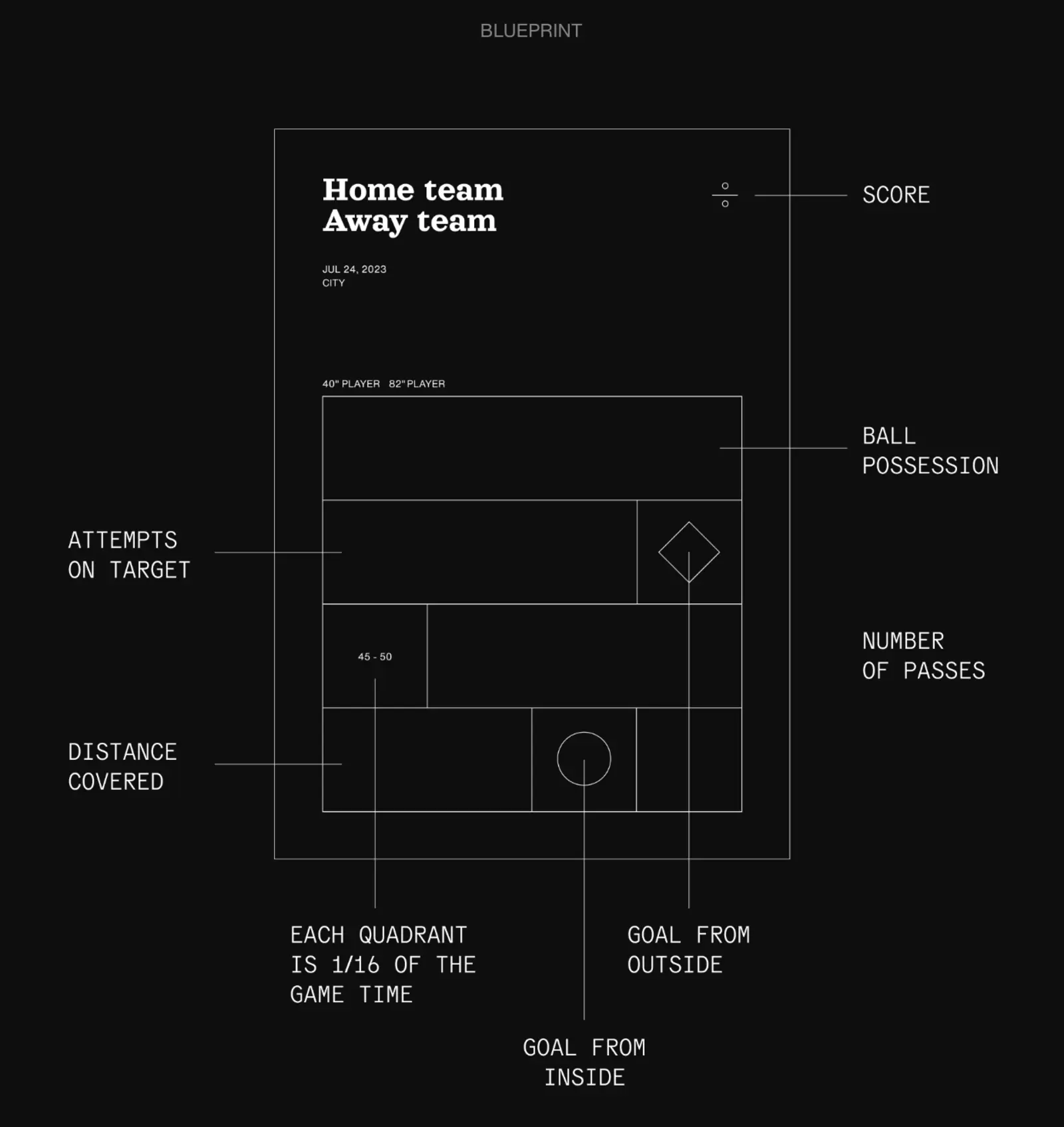
The 2023 encoding blueprint.
Seen together, the editions form a growing visual archive of football — proof that behind every scoreline lies a texture, a rhythm, and a story waiting to be felt before it is read. A new 2026 edition is already on its way.